
The Sower (after Millet)
by Vincent van Gogh
Created in 1890
The Sower (after Millet) is Van Gogh’s expressive reinterpretation of a theme that deeply inspired him throughout his life: the dignity of rural labor. Based on a famous work by French Realist painter Jean-François Millet, Van Gogh infuses the scene with his own emotional palette- cool blues, lavender tones, and windswept textures that create a sense of movement and spiritual depth. The lone figure strides forward through a field, scattering seeds with rhythmic determination. Van Gogh transforms Millet’s quiet realism into a vivid, almost symbolic drama of light, effort, and hope. This reproduction brings the painting’s layered brushwork and contemplative atmosphere to life, making it a striking addition to homes, offices, or creative spaces.
Available Un-framed Versions
Available Framed Versions
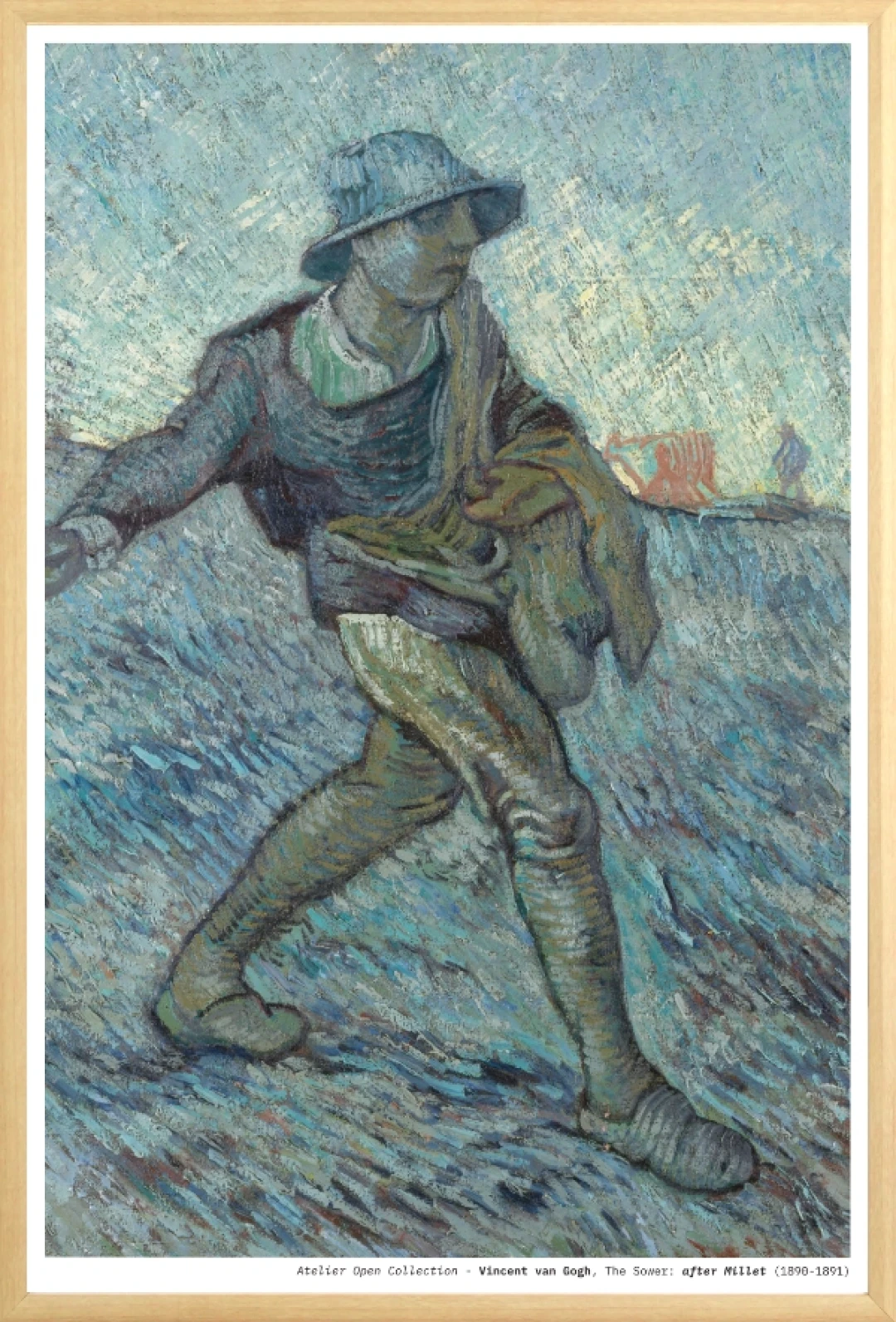
Jean-François Millet’s depictions of peasants and rural labor left a lifelong impression on Van Gogh, who saw them as profound expressions of humanity and social compassion. During the final months of his life in Auvers-sur-Oise, Van Gogh revisited several of Millet’s themes, creating reinterpretations that merged realism with his own evolving Post-Impressionist style.
In this version of The Sower, Van Gogh amplifies the scene’s atmosphere through directional brushwork and a cool, twilight palette. Unlike his earlier, more colorful Arles sowers, this late interpretation is quieter and more meditative. The figure blends with the landscape, suggesting a deep connection between human effort and the rhythms of nature.
These “after Millet” works were not copies but emotional translations. Van Gogh once wrote that Millet “sows the seeds of painting,” symbolizing artistic lineage as well as the dignity of honest labor. Today, this piece is appreciated as a heartfelt homage to one of Van Gogh’s artistic heroes.
Stay in the loop.
Products, prints, and dispatches from the workshop.
Get in Touch
Let's make
something.
For custom prints, web design, press, collaborations, or any other inquiries — send a message and we'll be in touch.